Solar panels are the most visible part of a solar system, and the part salespeople talk about most. Quotes often feature panel brands, wattages and claims about efficiency or technology. But for most homes, the differences between good-quality approved panels are smaller than the differences in design, installation and service. Understanding what the main specifications mean helps you compare quotes and avoid paying for features you don't need.
This guide explains how panels are made, what the datasheet figures mean, how panel technologies differ and what to look for in warranties.
W
Rated power
Under standard test conditions
%
Efficiency
Power per area
Approved
Product list
Needed for STCs
How a solar panel is made
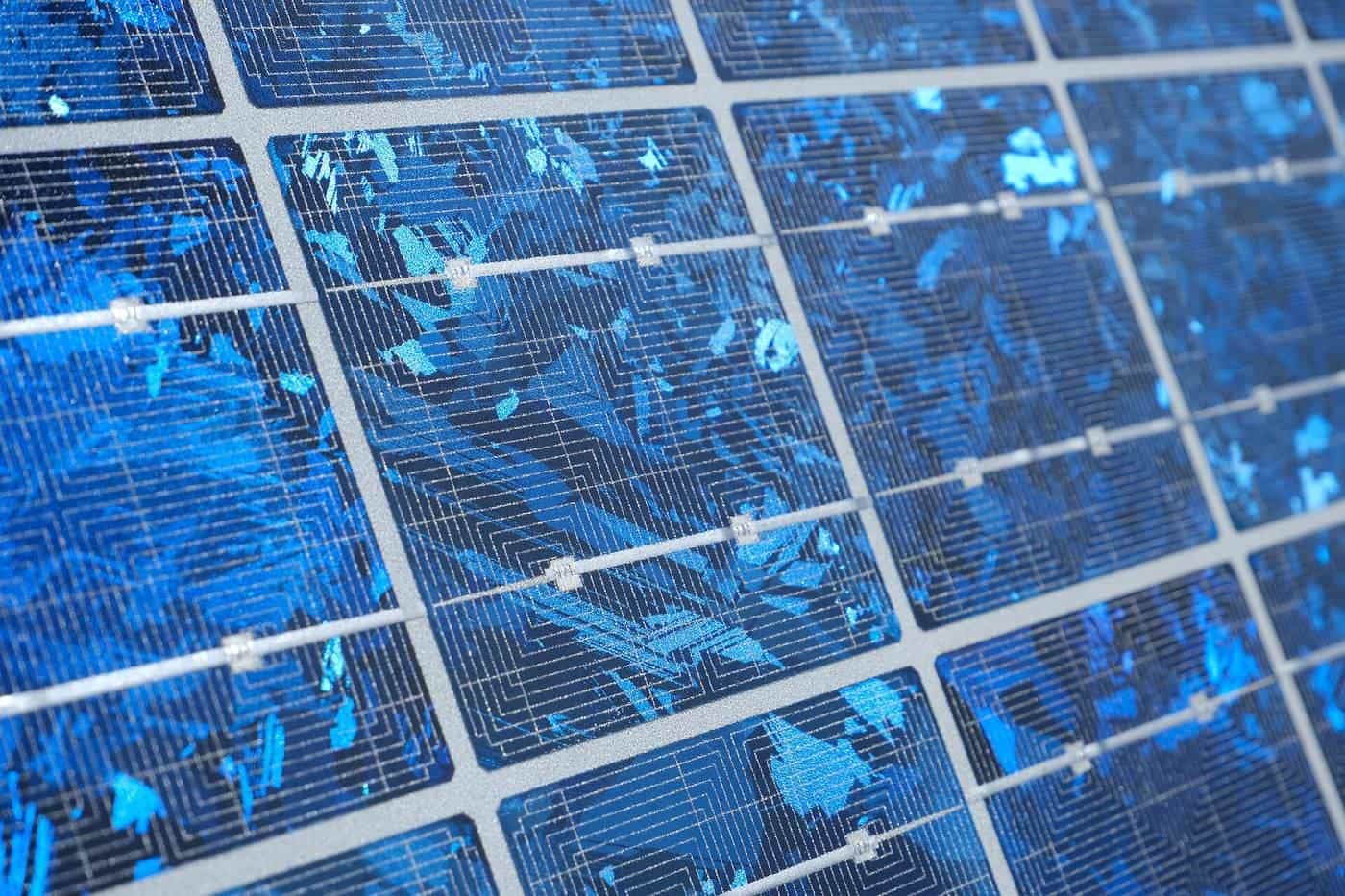
A typical panel contains a grid of silicon solar cells, connected by thin metal ribbons. The cells are sandwiched between a sheet of toughened glass on the front and a protective backsheet or second glass layer on the back, with layers of encapsulant to seal them. An aluminium frame adds strength and allows mounting. A junction box on the back contains bypass diodes and connects the panel's cables.
Panels are designed to withstand years of sun, heat, rain, hail and wind, and are tested to international standards for safety and durability.
Cell types
Most panels sold today use monocrystalline silicon cells, cut from a single crystal of silicon. They're generally more efficient than polycrystalline cells, which are made from many silicon crystals and have a speckled blue appearance. Polycrystalline panels were common in older systems but are now much less common.
Within monocrystalline panels, manufacturers use various cell technologies with names and acronyms that change as technology develops. Some designs improve efficiency, some reduce losses in heat or low light, and some capture light on the rear of the panel as well. These improvements are real, but their impact on a typical rooftop is often modest. Focus on the datasheet figures rather than the marketing names.
Reading a panel datasheet
Every panel has a datasheet listing its specifications. The most useful figures are:
- Rated power (W): the panel's output under standard test conditions. A system's size is the total of all panels' rated power.
- Power tolerance: the range by which actual output may differ from the rating. A positive-only tolerance means panels won't be below their rating at the test conditions.
- Efficiency (%): the proportion of sunlight hitting the panel that it converts into electricity. Higher efficiency means more power from the same area.
- Temperature coefficient of power (%/°C): how much output falls for each degree above the test temperature. Smaller numbers mean less loss in heat.
- Dimensions and weight: these determine how many panels fit on your roof and the load on the structure.
- Mechanical load ratings: the wind and snow loads the panel is tested to withstand.
Wattage and size
Panel wattages have increased over time, partly through better efficiency and partly because panels have become larger. A higher-wattage panel isn't automatically better; it may simply be bigger. What matters is how much total capacity fits on your usable roof area, and how the panels perform in your conditions. On a small or complex roof, more efficient panels can fit more capacity. On a large simple roof, efficiency matters less.
Heat and the temperature coefficient
Panels on an Australian roof can get very hot in summer, and their output falls as they heat up. The temperature coefficient tells you how much. In hot climates, a panel with a smaller temperature coefficient will produce relatively more in summer. Good airflow behind panels, which depends on the mounting system, also helps keep them cooler.
Shade and bypass diodes
Shade on part of a panel can reduce output from the whole panel, and in a series string, from other panels too. Panels contain bypass diodes that let current flow around shaded sections, limiting the loss. Some panel designs split the panel into halves to reduce the impact of shade. If your roof has unavoidable partial shade, discuss panel layout and inverter options, such as microinverters or optimisers, with your installer.
Appearance
Panels come in different looks: silver or black frames, white or black backsheets, and all-black panels that blend in with dark roofs. Appearance is a personal choice and usually doesn't affect performance much, although all-black panels can run slightly warmer. Local planning rules in heritage areas may affect where panels can be placed.
Warranties
Panels usually have two warranties:
- Product warranty: covers defects in materials and workmanship for a set number of years.
- Performance warranty: guarantees that the panel will still produce at least a set percentage of its rated output after a set number of years, with an allowed rate of decline each year.
Check the length and conditions of both. A warranty is only as good as the company behind it, so check whether the manufacturer has an Australian office or representative, and who you would contact to make a claim. Also check whether the warranty covers the cost of removing and replacing a faulty panel, which can be significant. Australian Consumer Law provides consumer guarantees that apply regardless of the manufacturer's warranty.
Approved products
For a system to be eligible for STCs, the panels must be on the Clean Energy Council's list of approved modules, which requires them to meet relevant standards. Ask your installer to confirm the exact panel model, and check it against the list.
Quality and counterfeit products
Panels vary in quality, and problems may not show up for years. Buying approved panels from an established installer who provides the full model number, datasheet and warranty details reduces your risk. Be wary of unusually cheap offers, vague product descriptions and panels without clear documentation. Some manufacturers offer ways to verify that a panel is genuine using its serial number.
How long do panels last?
Panels are designed for long service lives, and their output declines slowly over time, as reflected in the performance warranty. Panels can also fail early due to manufacturing defects, poor installation or damage. Regular checks and monitoring help you catch problems while they're under warranty.
Recycling and end of life
As older systems are replaced, recycling solar panels is becoming more important. Panels contain glass, aluminium, silicon and small amounts of other materials that can be recovered. Some states restrict sending e-waste, including panels, to landfill. Ask your installer how they handle old panels when upgrading a system, and check your state's rules and recycling options.
Questions to ask about panels
- What is the exact panel model, and is it on the approved list?
- What is the panel's efficiency and temperature coefficient?
- How many panels will fit, and where will they go?
- What are the product and performance warranty terms, and who backs them?
- Does the warranty cover removal and reinstallation costs?
- Why have you chosen this panel for my roof?
Panel comparison checklist
0 of 8 done
Ticks are saved in this browser only.
Key points
Most homes are well served by good-quality approved monocrystalline panels. Compare panels on efficiency, temperature coefficient, warranties and the company behind them, not marketing names or wattage alone. Make sure the exact model is approved, and get the datasheet and warranty documents with your quote.
Frequently asked questions
Are higher-wattage panels better?
Not necessarily. Higher-wattage panels are usually physically larger. Efficiency tells you how much power a panel produces for its size, which matters if roof space is limited.
What's the difference between monocrystalline and polycrystalline?
Monocrystalline cells are cut from a single silicon crystal and are generally more efficient; polycrystalline cells are made from many crystals. Monocrystalline panels now dominate the market.
What does the temperature coefficient mean?
It shows how much a panel's output falls as it heats up above the test temperature. A smaller number means less loss in hot weather, which matters in much of Australia.
What warranties do solar panels have?
Usually a product warranty, covering defects in materials and workmanship, and a performance warranty, guaranteeing a minimum output over a set period. Check both, and who backs them.
How do I know a panel is approved?
Check the Clean Energy Council's list of approved modules. Systems must use approved panels to be eligible for STCs.
Sources and further reading
Facts on this page were checked against these primary and official sources. Conditions change — confirm before you travel or buy.
- Solar PV systems — Your Home, Australian Government
- Small-scale Renewable Energy Scheme — Clean Energy Regulator
- Solar battery installers and designers — Clean Energy Regulator
- Consumer guarantees — ACCC